
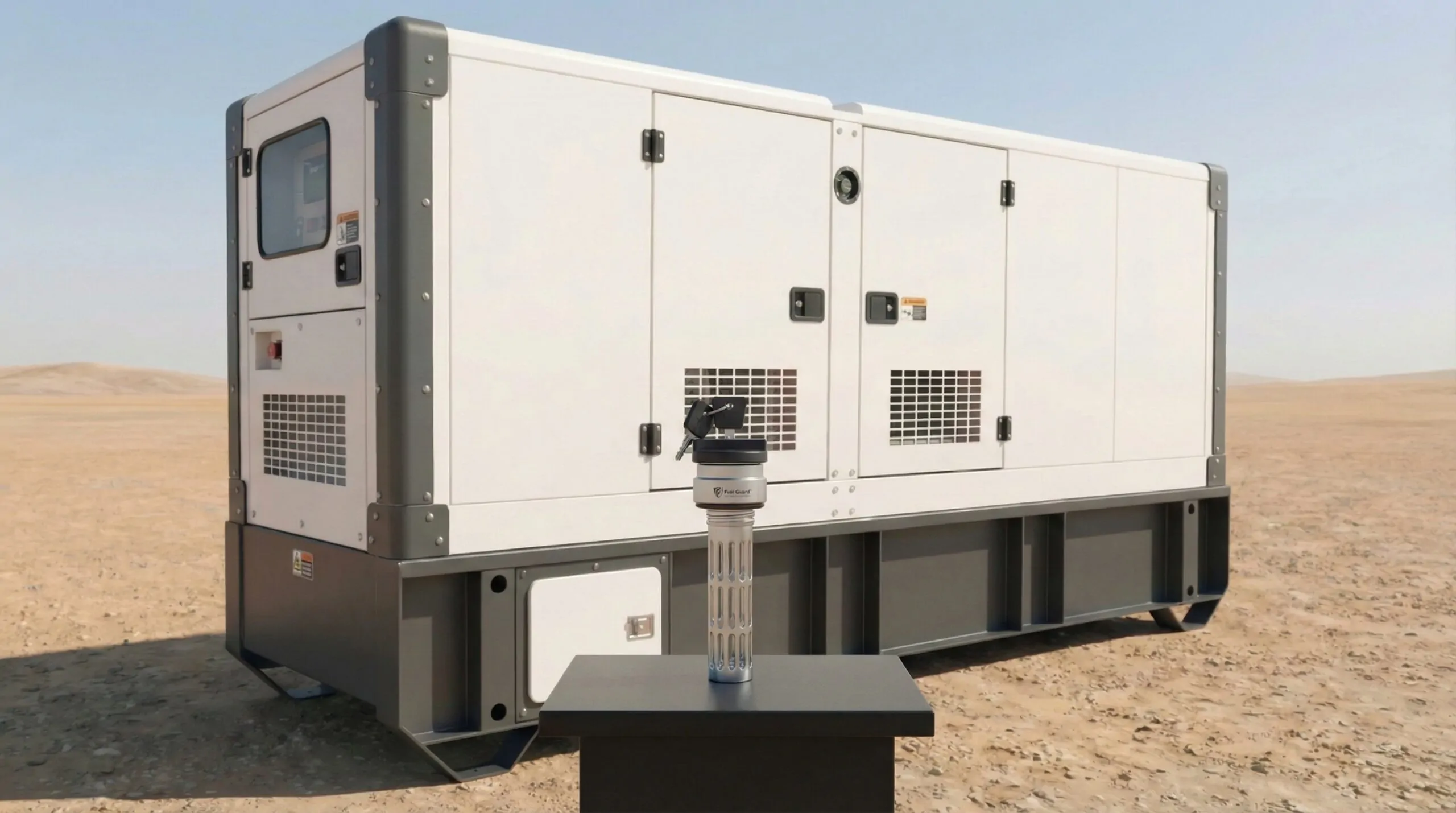
Fuel Guard Fuel Tank Security System
Compatible Vehicle Makes and Models for Stationary and Mobile Power Units
What Do We Provide to Businesses as
Fuel Guard by Protecting Fuel Tanks in Stationary and Mobile Power Unit Vehicles ?

Fuel Guard Secures All Points of the Fuel Tank Against Abuse
Fuel Guard provides physical protection for all critical points such as the fuel tank neck, float, fuel filter, and drain plug. It definitively prevents siphoning with a hose, drilling, and dismantling methods before an incident occurs.

Fuel Guard Completely Eliminates Disruptions Caused by Fuel Theft
Cases of running out of fuel due to theft lead to the vehicle being stranded, delays in deliveries, and customer dissatisfaction. Fuel Guard reduces these disruptions to zero. By guaranteeing that your vehicles work planned and uninterruptedly, it maximizes operational efficiency and prevents loss of work.

Fuel Guard Ends Businesses' Constant Fear of Diesel Theft
Drivers remain under constant stress with the fear of fuel theft when they park their vehicles. Fuel Guard systems ensure that drivers know their fuel is safe. This situation allows drivers to focus on their work, reducing their stress and thereby increasing general personnel motivation and loyalty.

Fuel Guard Is an Investment, Not a Cost; It Pays for Itself Even with the Prevention of a Single Fuel Theft
The Fuel Guard system is an investment rather than a cost. It can pay for its investment cost in a short time even with a single prevented fuel theft or repair cost. It provides a fast and clear Return on Investment (ROI) for the business thanks to all the costs it prevents, such as theft, breakdown, operational delay, and premium increases.

Fuel Thıeves Cannot Tamper wıth the Tank Fuel Thıeves Cannot Tamper wıth the Tank Fuel Thıeves Cannot Tamper wıth the Tank Fuel Thıeves Cannot Tamper wıth the Tank Fuel Thıeves Cannot Tamper wıth the Tank Fuel Thıeves Cannot Tamper wıth the Tank Fuel Thıeves Cannot Tamper wıth the Tank Fuel Thıeves Cannot Tamper wıth the Tank
Fuel Thıeves Cannot Steal Fuel Fuel Thıeves Cannot Steal Fuel Fuel Thıeves Cannot Steal Fuel Fuel Thıeves Cannot Steal Fuel Fuel Thıeves Cannot Steal Fuel Fuel Thıeves Cannot Steal Fuel Fuel Thıeves Cannot Steal Fuel Fuel Thıeves Cannot Steal Fuel
Problems You May Experience If You Do Not Use Fuel Guard
Fuel Tank Protection Systems in Stationary and Mobile Power Units ?

Fuel Theft Risk
The absence of physical protection barriers like Fuel Guard leaves the fuel tank defenseless against thieves.

Operational Disruption and Out of Service Status
A single theft incident caused by the lack of Fuel Guard triggers a series of technical problems, ranging from fuel filter clogging to fuel pump failure, and this creates a continuous troubleshooting cost.

Decrease in Labor and Performance Morale
These interruptions caused by the lack of Fuel Guard protection decrease the motivation of drivers and operators, reduce labor productivity, and create a crisis of confidence within the business.
Fuel Guard Olarak
Sabit ve Mobil Güç Ünite Araçlarının Hangi Bölgelerde Mazotunu Koruyoruz
Tank Cap and Tank Neck (Anti-Siphon Protection)
The most common and first method that comes to mind in fuel theft is intervention through the fuel tank cap. Since the fuel tanks of stationary generators and power units have very large volumes and are often located in unsupervised areas, forcing the caps, breaking them, or opening them with a duplicated key is a frequent occurrence. Fuel Guard protects this main entry point with high-security, patented locking systems and physical shields that show extraordinary resistance against external interventions such as lockpicks or crowbars.
However, Fuel Guard protection does not end here; the real deterrence begins inside the tank neck. At this point, "Anti-Siphon" (or "Siphon Preventive") technology comes into play. This special apparatus, permanently mounted to the generator's tank neck, makes it physically impossible to drop a hose, pipe, or similar device into the tank and withdraw fuel by "siphoning." Even if the tank cap is somehow bypassed or broken, the anti-siphon strainer prevents the thief from reaching the fuel. This is the first and strongest line of defense of Fuel Guard for stationary and mobile power units.
Fuel Float
When experienced fuel thieves realize that the main fuel entry point, the tank cap, is protected with high-security systems, they search for an alternative and weaker access point. In the tanks of stationary generators and mobile power units, this potential weak link is usually the fuel float area. This sensitive part, which measures the fuel level of the unit, is mostly located at the top of the tank in a relatively less protected area and is easily accessible by removing a few screws due to its standard installation.
Thieves target removing or breaking the float by aiming at this vulnerable point. This intervention provides them with both a direct access path into the tank and the opportunity to quickly withdraw fuel by siphoning through this opening. Moreover, this type of theft not only leads to fuel loss but also causes the float to malfunction, creating high repair and spare parts costs for the business owner and disrupting the unit's energy production.
Anticipating this critical vulnerability, Fuel Guard has developed steel protection covers and locking systems specially designed for the float area of generators and power units. This secure cover is firmly mounted over the float sensor and completely seals this upper part of the tank against external interventions, forcing, and sabotage. Thus, even if the tank cap is secure, theft attempts that can be made through the float area also result in failure.
Under-Tank Fuel Drain Plug
Prevent devastating fuel theft from the drain plug in stationary generators and power units. Fuel Guard high-security plugs and steel covers ensure 360-degree tank protection.
Content Block One of the methods often ignored in fuel security, but with the most devastating results, is draining from the bottom of the tank through the discharge plug in stationary generators and power units with large-volume fuel tanks. Every fuel tank has a standard discharge plug placed for maintenance and cleaning processes. Professional thieves, taking advantage of these units staying in construction sites, industrial facilities, or unsecured areas, can get under the generator, unscrew this standard plug, and drain the entire tank in a very short time.
This method is extremely dangerous because of both the short duration of the theft and the fact that it allows the highest amount of fuel to be stolen; moreover, it is much more difficult to detect than other theft methods. To eliminate this extremely serious risk, Fuel Guard has developed special security solutions for the fuel tank discharge plugs of generators and stationary power units. These solutions include locked plugs that replace the standard plug and are equipped with special keys or designs that make external intervention impossible. Some Fuel Guard models completely block access to this area by mounting an additional steel protection cover over the plug. In this way, the risk of fuel being "drained from the bottom" is reduced to zero, and the fuel tank is placed under a literal 360-degree protection.
Frequently Asked Questions for Stationary and
Mobile Power Units in the Field of Fuel Tank Security ?
Does the Fuel Guard Anti-Siphon system slow down the fuel filling speed?
No. Fuel Guard Anti-Siphon apparatuses are designed according to international standards for high flow rates. It definitely does not affect the filling time and speed even with high-flow fuel pumps used in trucks and tractors, preserving the operational efficiency of your fleet.
Which truck and tractor brands is Fuel Guard compatible with?
Fuel Guard solutions provide full compatibility with the standard fuel tank necks and float designs of all major European and American truck and tractor brands such as Mercedes-Benz, MAN, Ford Trucks, Scania, Volvo, DAF, and Renault. Regardless of the model, it offers security solutions for a wide range of vehicles.
Isn't it enough to just protect the tank cap? Why does Fuel Guard protect three points?
A locked cap alone does not prevent the most common siphoning theft. Fuel Guard provides complete security by simultaneously protecting the three main targets of thieves: Tank Neck (Siphoning), Float Area (Dismantling), and Drain Plug (Draining). Even if one point is bypassed, other points continue to protect the fuel.
Does Fuel Guard installation affect the vehicle warranty or damage the tank?
No. Fuel Guard products do not require permanent cutting, drilling, welding, or modification on the vehicle's original fuel tank. Since installations are made simply by screwing or seating onto existing connection points like the tank neck or float cover, they do not damage the vehicle warranty or the physical integrity of the tank.


