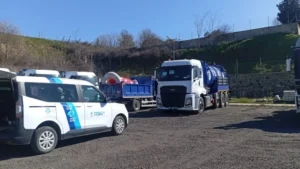



Fuel theft is a significant problem that leads to serious financial losses, especially for commercial vehicles and businesses operating fleets. One of the most fundamental reasons for this is rising fuel costs. As fuel prices increase, fuel becomes both a valuable and easily liquidatable target. Diesel fuel, in particular, is a frequent target of theft because it finds buyers quickly on the secondary market.
Another major reason is that the fuel tank structures in vehicles are not sufficiently secure. Unlocked tank caps, unprotected fuel lines, and exposed bottom drain points make it easy for thieves to access fuel in a short time. Vehicles with such weak points become attractive targets, especially for professional thieves.
Parking and operating conditions also directly impact fuel theft. Vehicles left in open areas overnight, construction sites, roadsides, and areas without security control are where the risk of theft is highest. Vehicles that remain stationary for long periods allow fuel to be siphoned without being noticed.
The lack of regular fuel consumption monitoring is also a significant factor. In businesses without supervision and reporting systems, small amounts of fuel loss go unnoticed, and over time, this can turn into systematic losses that become a habit. Such losses usually surface months later, making retrospective detection difficult.
The absence of mechanical or electronic fuel security systems is also among the common causes of fuel theft. The lack of protection at critical points—such as the fuel tank neck, the fuel sender (float) area, or the fuel line—leaves the vehicle completely vulnerable. Even simple security measures have the power to deter many theft attempts.
In some cases, fuel theft can also stem from internal reasons. Unauthorized personnel usage, insufficient driver oversight, and non-transparent fuel tracking can lead to internal fuel losses. These situations are usually noticed late and cause greater long-term damage to businesses as they are difficult to detect.
Why Does Fuel Theft Occur?
- High Financial Value of Fuel Fuel, especially diesel, is a product that can be easily sold and quickly converted into cash. This makes fuel an attractive target for thieves.
- Easy Access to Fuel Tanks In many vehicles, the fuel tank cap, bottom drain point, or fuel line is not adequately protected. These openings allow fuel to be stolen in a short amount of time.
- Exploitation of Lack of Supervision and Tracking When fuel consumption is not monitored regularly, small losses go unnoticed. Thieves act by knowing these control gaps.
- Parking Vehicles in Unsafe Areas Vehicles left in open areas at night, on construction sites, or in uncontrolled zones carry a high risk for fuel theft.
- Difficulty in Detecting Fuel Theft Fuel loss is often not noticed immediately, and proving it is difficult. This keeps the risk of being caught low for thieves.
- Lack of Deterrent Security Systems The absence of mechanical or electronic fuel protection systems on the vehicle encourages thieves and makes stealing fuel easier.
Operational Risk Analysis
Risk Score Due to the standard fuel tank structure and the lack of additional security measures, the vehicle is in a high-risk group for fuel theft. Unprotected points are open to rapid and unnoticed interference.
Return on Investment (ROI) Thanks to the loss prevention provided by the fuel security system, the investment cost is recovered in a short time. Under average usage, the system pays for itself in approximately 3 months.
Vehicle Groups with the Highest Fuel Theft Risk
Trucks & Tractors Due to their large fuel tank capacities and the fact that they are usually parked in open areas at night, they are the primary targets for fuel thieves. Tampering with the tank cap and bottom drain points can lead to large amounts of fuel loss in a short time.
Lorries & Vans Frequent stop-and-go movements in urban and intercity use, along with parking in different locations, make fuel security difficult. Uncontrolled parking areas create risk.